What Are the Essential Smart Kitchen Appliances from China?

Time:2026-11-13 Author:Madeline
0%

A modern kitchen should do more than connect to Wi-Fi. It should save time, reduce guesswork, and make everyday cooking easier. For buyers comparing appliances from China, that means looking beyond sleek screens and voice controls. A smart refrigerator can track food and suggest what to use; an app-connected rice cooker can adjust timing; and an induction cooktop can offer precise heat with less waiting. Useful details matter. Can the app work reliably? Are replacement parts available? Does the appliance still function well when the internet drops?

Food-tech analyst Michael Wolf, founder of The Spoon, has highlighted the importance of practical innovation in food and kitchen technology. A fair paraphrase of that perspective is simple: connected features earn their place when they improve real routines. That is a useful test for any product claim. A bright display is not the same as dependable performance.

So, “What are the essential smart appliances for a modern kitchen?” The answer depends on how you cook, your available space, and which tasks consume your time. For many homes, the strongest starting points are a smart refrigerator, an induction cooktop, a connected oven or air fryer, and a reliable dishwasher. Not every kitchen needs all four. Some features still feel unfinished, and compatibility can vary between brands. This guide will examine China-made options through practical criteria: cooking performance, app usability, energy use, support, and value. Small details count. A quiet dishwasher cycle or a cooker that gets dinner right matters more than another feature nobody uses.
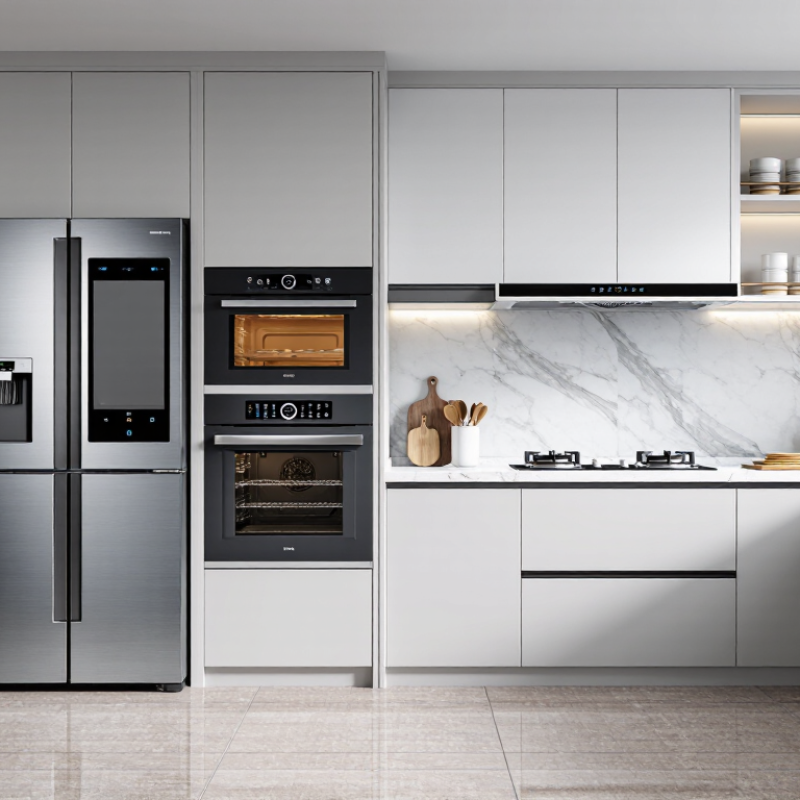
What Are the Essential Smart Kitchen Appliances from China?

What Defines a Smart Kitchen Appliance from China?

A smart kitchen appliance from China is defined by what it can do, not merely where it is made. It connects sensors, software, and useful controls to improve a real cooking task. A refrigerator might track temperature and send a door alert. A cooker could adjust heat through a phone app. That is the distinction. Connectivity alone is not enough; the appliance should work reliably, explain its status clearly, and offer practical support after purchase.

IDC’s China Smart Home Device Market Quarterly Tracking Report forecast 2024 shipments of about 290 million smart-home devices, up 7.1% year over year. This figure covers the wider smart-home market, not kitchen appliances alone. It shows the scale of connected products, but not their quality. Look for stable Wi-Fi performance, clear data settings, useful offline controls, and software updates. A polished app cannot rescue a confusing interface. I have also seen a small setup detail—such as a router placed behind a metal cabinet—cause needless connection problems.

Tips: Test the appliance’s core controls before relying on its app. Check whether it still works when the internet drops. Read the care and update instructions; they are easy to overlook.

Which Appliance Categories Are Essential in a Smart Kitchen?

An essential smart kitchen is built around useful appliance categories, not a crowded counter. Refrigeration matters because it stores fresh food and may help monitor temperature or track inventory. Cooking appliances, such as an induction hob or connected oven, support controlled heat and timed cooking. Choose controls that are easy to use when your hands are wet or busy. Small details matter.

Food preparation and cleanup complete the core. A smart multicooker or precision kettle can simplify repeat tasks, while a dishwasher with delay scheduling offers flexible operation. Ventilation is easy to overlook; a responsive hood helps clear steam and cooking odors. Connected features are useful only when setup is reliable and manual controls still work. I would not buy every category at once. More devices can mean more apps and more troubleshooting.

Tips: Check Wi-Fi requirements, cleaning needs, and available counter space before buying. Keep essential functions usable without an app. Start with one appliance that solves a real daily problem, then see whether it genuinely saves time.

How Sensors and Connectivity Enable Smart Kitchen Functions

In a connected kitchen, sensors turn ordinary appliances into responsive tools. A refrigerator can track internal temperature and send an alert when its door stays open. An oven can report preheating status to a phone, while a cooktop can adjust heat using temperature feedback.

Useful details. But connectivity only helps when alerts are clear and settings are easy to control.

The International Energy Agency reports that buildings use about 30% of global final energy, making efficient operation important, though kitchen appliances are only one part of that total.

The UNEP Food Waste Index Report 2024 estimates households generated 60% of food waste measured in 2022. Sensors that monitor storage conditions or flag aging food may help households act sooner; they cannot guarantee less waste.

A practical smart kitchen should also show temperature readings, explain alerts, and allow manual control when a network drops.

Small signals matter. Yet sensors can misread conditions, and app notifications are easy to ignore. That gap deserves attention.

How Chinese Manufacturers Integrate Appliances into Home Ecosystems

Chinese manufacturers increasingly design kitchen appliances as connected parts of a home ecosystem, not isolated machines. A refrigerator can track stored food, while an oven receives cooking settings through a household app. The cooker hood and induction hob may also coordinate fan speed with heat levels. Useful in theory. In practice, setup still varies between devices.

The scale of connected technology is growing. IoT Analytics estimated 18.8 billion connected IoT devices worldwide at the end of 2024, a 13% increase from 2023. This figure covers many sectors, not just homes, but it shows why manufacturers are investing in device communication. In a smart kitchen, shared controls can reduce app switching and send alerts when a cycle ends. A dishwasher notification is handy when the kitchen is noisy.

Integration depends on more than sensors. Manufacturers need reliable Wi-Fi connections, clear privacy settings, and controls that remain usable when internet access fails. Some systems still struggle to connect across different platforms. That is a real limitation. Buyers should check whether appliances support common control standards and whether essential functions work from the appliance itself. A smart feature is less useful when a simple temperature change requires troubleshooting.

What to Consider When Choosing Compatible and Safe Appliances

Choosing a smart appliance from China starts with the kitchen it will actually serve. Check the rating label for voltage, frequency, and power, then compare these with your home supply. A plug that fits is not proof of electrical compatibility. A simple travel adapter cannot correct a voltage mismatch. A kettle or cooker may draw substantial power. Small detail, real risk.

Check how the appliance connects before buying. Some models require 2.4 GHz Wi-Fi, while others support different networks. Confirm that the control app is available in your region and works with your phone’s operating system. If you use a smart-home hub, verify the supported connection standard rather than trusting a vague “smart compatible” claim. Also review what account setup and data permissions the app requires. These details are easy to overlook.

For safety, look for readable instructions, a clear importer or seller contact, and certification appropriate to your market. Check whether the manual explains cleaning, ventilation, and safe operation near water. Photos of the plug, cord, and rating label can help you ask specific questions before ordering. I would not treat a polished product page as proof of dependable support; return terms and spare-part access deserve a careful read, too. A checklist can still miss something. That is worth admitting.

FAQS

What makes a kitchen appliance smart?

It uses sensors, software, and useful controls to improve a cooking task. A phone connection alone is not enough.

What should a refrigerator alert tell me?

It can report a warm interior or an open door. Clear readings help; vague alerts are easy to ignore.

Can smart appliances work without internet access?

Essential controls should still work manually when the connection drops. Test this before relying on an app.

How can sensors help with food storage?

Temperature monitoring may help you notice storage problems sooner. It cannot guarantee less food waste.

Can an oven send useful updates?

It can show when preheating is complete. That is handy, unless the notification arrives late.

Do connected appliances always work smoothly together?

No. Shared controls can reduce app switching, but devices may still struggle to connect across platforms.

What can affect a kitchen appliance’s Wi-Fi connection?

A router behind a metal cabinet may weaken the signal. Setup details matter.

What should I check before choosing a smart appliance?

Try its core controls, review privacy settings, and check update instructions. I admit, those instructions are easy to skip.

Conclusion

Smart kitchen appliances from China combine practical cooking functions with digital controls, sensors, and network connectivity. Essential categories may include smart refrigerators, ovens, cooktops, rice cookers, dishwashers, and ventilation systems. Together, these appliances can help with food storage, meal preparation, cleaning, and energy management. What are the essential smart appliances for a modern kitchen? The answer depends on household routines, available space, and which tasks would benefit most from automation.

Sensors can monitor conditions such as temperature, humidity, and cooking progress, while connected features may let users adjust settings, receive alerts, or coordinate appliances through a home system. When choosing products, consider whether they work with your existing devices and network, whether their controls are straightforward, and whether they include reliable safety features such as overheating protection and automatic shutoff. A well-planned smart kitchen prioritizes compatibility, dependable performance, and useful functions rather than adding technology for its own sake.

Madeline

Madeline

Madeline is a dedicated marketing professional with a wealth of expertise in our company's core offerings. With a keen understanding of the industry, she brings a unique perspective to her role, consistently delivering high-quality content that highlights the superior aspects of our products. As......