China Top Rotating Air Brush for Salon Quality Curls?

Time:2026-11-06 Author:Madeline
0%

A rotating air brush can shape soft curls while drying, but salon-like results depend on more than the tool. Hair length, density, dampness, and heat settings all change the finish. A smooth barrel can build a loose bend; smaller sections create more definition. The difference shows in the details: evenly damp roots, controlled tension, and curls allowed to cool before brushing.

Grand View Research’s hair styling tools market report tracks a growing category that includes dryers and styling brushes. That broad market context matters, but it does not prove that every rotating brush performs equally well. Product design, airflow, barrel size, and heat control still need careful comparison. Small details matter.

How to get salon-quality curls using a rotating air brush? Start with towel-dried hair and a heat protectant, then work in manageable sections. Keep the brush moving, guide the ends around the barrel, and use a cool setting to help set each curl. Avoid pulling hard or holding concentrated heat in one spot. Fine hair may need lower heat and shorter passes; thicker hair may need smaller sections, not simply higher heat.

A named expert quotation was not available in the supplied material, so I won’t invent one. That is a limitation worth acknowledging. This guide should pair any expert advice with a verifiable source and explain what the tool can—and cannot—do. The goal is polished, touchable curls, not a promise that one brush will reproduce every salon finish.
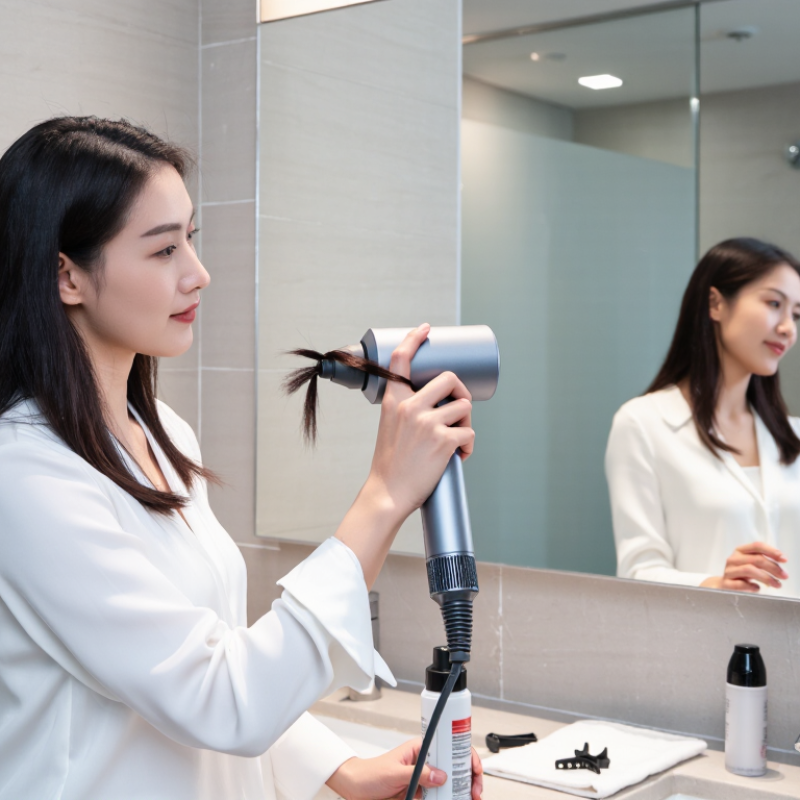
China Top Rotating Air Brush for Salon Quality Curls?

What a Rotating Air Brush Is and How It Works

A rotating air brush combines a heated barrel, bristles, and airflow in one styling tool. The motor turns the barrel in either direction, while warm air helps shape each section of hair. Bristles guide the strands around the barrel and add gentle tension. That tension can smooth the surface and encourage a curl or soft bend as the hair dries.

It works best on towel-dried hair, not soaking-wet hair. Divide hair into small sections, place the brush near the ends, and guide it toward the roots without pulling hard. Use the cool setting briefly to help the shape settle. Keep the barrel moving, and avoid holding heat against one spot.

Fine or fragile hair may need lower heat and shorter passes. It takes practice. The brush can snag if a section is too thick, and the result may look uneven at first. A rotating brush can make styling easier, but it cannot guarantee salon-quality curls on every hair type.

How Airflow and Barrel Rotation Shape Curls

A rotating hot-air brush shapes curls through directed airflow and barrel motion. Airflow dries each section, while the rotating barrel wraps hair around a heated surface. Use hair that is damp, not dripping; excess water can prolong styling. Keep sections narrow enough to wrap without overlapping. Small sections matter. A smaller barrel usually creates tighter curls, while a larger one makes softer bends. Rotation can help form an even shape, but it cannot replace careful sectioning or control.

Heat needs restraint. A controlled study published in Annals of Dermatology in 2011 compared dryer settings of 47°C at 15 cm, 61°C at 10 cm, and 95°C at 5 cm. The researchers observed greater cuticle damage with higher heat and recommended distance and movement. This was a hair-dryer study, not a direct test of rotating brushes, so the findings offer guidance rather than a guaranteed temperature rule.

Start on a lower setting, keep the brush moving, and release each curl only after it feels dry. Let it cool briefly before loosening it. Not magic. Fine or previously processed hair may need less heat, and results can vary. I still find that the final curl often looks less uniform than the first; that is a useful sign to adjust section size, not simply turn up the heat.

Features to Compare in Rotating Air Brushes from China

When comparing rotating air brushes from China, look beyond barrel size and advertised wattage. Check whether rotation works in both directions, stops instantly, and remains smooth with a damp section of hair. A narrow barrel can shape shorter layers; a wider one makes looser bends on long hair. Useful details include removable filters, a swivel cord, clear heat settings, and a cool-shot control. Small details matter.

Heat control deserves close attention. A 2011 study in Annals of Dermatology, “Hair Shaft Damage from Heat and Drying Time of Hair Dryer,” compared drying conditions including a 47°C setting at 15 cm. Its test setup underscores why temperature and distance belong in product comparisons, not just marketing claims. Ask suppliers for measured barrel temperatures, airflow figures, and test conditions; “low,” “medium,” and “high” alone are not useful specifications. Test it twice. For salon use, assess rotation under repeated passes, cord strain, noise, and how easily hair releases from the barrel. Review the manual and safety documentation, then compare samples using the same hair length and moisture level. A small snag during a quick demo may become a daily nuisance. I would also verify replacement-filter availability before ordering; that detail is easy to overlook.

China Rotating Air Brushes: Barrel Sizes to Compare

How to compare: Common barrel diameters include 25, 32, 38, and 50 mm. Smaller barrels generally create tighter curls, while larger barrels are suited to looser curls or waves. The result also depends on hair length, technique, and the brush design, so check the barrel’s listed diameter before buying.

How to Match a Brush to Your Hair Type and Styling Goals

A rotating air brush works best when its barrel and airflow suit your hair, not just your desired curl. Fine or fragile hair usually benefits from a smaller section, a lower heat setting, and gentle tension. Thick hair may need a larger barrel and more drying beforehand; the brush shapes hair more evenly when it is not soaking wet. For loose bends, choose a wider barrel. For tighter curls, try a narrower one, then adjust based on how your hair holds shape. Results vary. Even careful styling can fall flat in humidity.

Heat deserves attention. A 2011 study in Annals of Dermatology found that blow-drying distance and movement affected hair-surface damage; a dryer held about 15 centimeters away and kept moving produced less damage than closer, stationary drying. That study examined dryers, not rotating brushes, so treat its findings as guidance, not a direct test of brush tools. A brush also adds tension, which can stress damp strands. I’d avoid chasing perfect curls in one pass.

Tips: Towel-blot first, then dry hair until it is mostly dry. Start on a low setting and test a small section near the nape. Let each section cool before releasing it. If the ends snag or feel rough, reduce tension or heat. Don’t force the rotation. Sometimes the simplest styling plan is the one your hair tolerates.

How to Use a Rotating Air Brush for Salon-Quality Curls

For polished curls, start with hair that is about 80–90% dry. A rotating air brush works best on slightly damp, detangled hair, not wet strands. Apply heat protectant, then divide your hair into sections roughly two inches wide. Smaller sections usually curl more evenly, though they take longer.

Place the brush beneath a section near the ends and guide it toward the roots without pulling hard. Choose the rotation direction that moves hair away from your face, and keep the tool moving to avoid concentrating heat in one spot. Hold each curl briefly, then use the cool setting before releasing it. Let curls cool fully before separating them with your fingers. The shape may look uneven at first; that happens, and repeating a pass can sometimes make the curl too loose.

Tips: Use low or medium heat on fine hair. Keep the barrel away from your scalp, and clean off trapped hair after the tool cools. If a section feels hot or catches, stop and reset it.

FAQS

What is a rotating air brush?

It combines a heated barrel, bristles, and airflow. The motor turns the barrel to help shape hair as it dries.

Should hair be wet or dry before styling?

Use towel-dried, damp hair, not soaking-wet hair. Too much water can prolong styling.

How can I get a more even curl?

Divide hair into narrow sections and wrap each section without overlap. Keep the brush moving. It takes practice.

Does barrel size affect the result?

Yes. A smaller barrel usually creates tighter curls, while a wider barrel makes softer bends.

How can I reduce heat damage?

Start with a lower heat setting and use short, moving passes. Fine or processed hair may need less heat. Let each curl cool briefly.

What does research say about heat and hair?

A 2011 hair-dryer study observed more cuticle damage at higher heat. It did not directly test rotating brushes, so its findings are guidance, not a fixed rule.

Which features are useful to compare?

Check for two-way rotation, clear heat settings, a cool-shot control, and a swivel cord. A removable filter can help with upkeep.

What should I check before choosing a brush for frequent use?

Compare measured temperatures, airflow, noise, cord strain, and how easily hair releases. Try samples under the same conditions. I might overlook the filter, but replacement availability matters.

Conclusion

A rotating air brush combines warm airflow with a turning barrel to dry, smooth, and shape hair in one styling step. Airflow helps prepare and set each section, while barrel rotation wraps the hair to create curls or waves. When comparing options, consider heat and speed settings, barrel size and direction, airflow control, and safety features. These details affect the finish and can help you choose a tool suited to your hair length, thickness, and styling goals.

How to get salon-quality curls using a rotating air brush? Start with towel-dried hair and apply a suitable heat protectant. Divide the hair into manageable sections, select a heat setting that fits your hair type, and guide each section around the barrel without pulling tightly. Change the barrel direction for a balanced look, then allow curls to cool before gently loosening them. With careful sectioning and controlled heat, a rotating air brush can help create polished curls while keeping the routine simple.

Madeline

Madeline

Madeline is a dedicated marketing professional with a wealth of expertise in our company's core offerings. With a keen understanding of the industry, she brings a unique perspective to her role, consistently delivering high-quality content that highlights the superior aspects of our products. As......