How to Set Humidifier Humidity for Better Sleep?

Time:2026-09-18 Author:Henry
0%

A humidifier can make a bedroom feel calmer, especially when heating dries the air overnight. Yet more moisture is not always better. A dry throat, itchy skin, or static electricity may suggest low humidity. Condensation on windows, damp bedding, or a musty smell signals the opposite problem.

What is the ideal humidity level for sleeping with a humidifier? Most indoor-air experts recommend keeping relative humidity between 30% and 50%. For many sleepers, 40% to 50% feels comfortable without making the room damp. The right setting still depends on climate, room temperature, allergies, and the humidifier’s output. There is no magic number.

Use a small hygrometer near the bed, away from the mist stream. Check it before sleep and again in the morning. If the reading stays below 30%, increase the setting gradually. If it rises above 50%, reduce the output or run the device for less time. A cool-mist model may be practical, but every humidifier needs regular cleaning. Mineral dust and microbial growth can irritate sensitive airways.

Watch the room, not only the display. A cool window with tiny water beads is useful feedback. So is waking with a heavy, stuffy feeling. These clues can challenge an overly simple routine. People with asthma, allergies, or other breathing concerns should ask a healthcare professional for personalized advice. A comfortable bedroom should feel fresh, not wet.
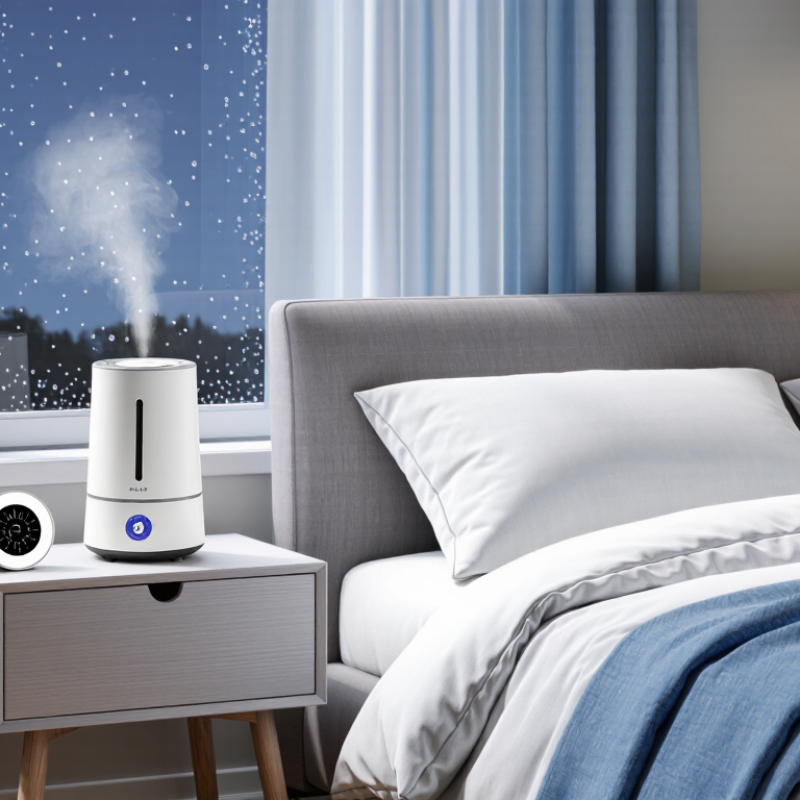
How to Set Humidifier Humidity for Better Sleep?

Understanding the Ideal Humidity Range for Better Sleep

How to Set Humidifier Humidity for Better Sleep?

The ideal bedroom humidity usually sits between 30% and 50%. This range comes from guidance by the U.S. Environmental Protection Agency. It can ease dry throats, irritated noses, and uncomfortable morning coughing. Yet, higher humidity does not automatically improve sleep. The American Society of Heating, Refrigerating and Air-Conditioning Engineers links indoor comfort with temperature, airflow, clothing, and personal sensitivity. Humidity is only one piece.

Start near 40%.

A small hygrometer can show whether your room is truly dry. Place it away from the humidifier’s mist, windows, and heating vents. If your nose feels dry, raise humidity gradually toward 45%. If bedding feels damp, reduce it. The EPA warns that indoor humidity above 50% can support mold and dust mites. That may worsen allergies, congestion, and nighttime breathing. Clean the water tank regularly, too. Stagnant water can become a hygiene concern.

The evidence is not perfect. Sleep studies often examine temperature, airflow, or respiratory symptoms instead of humidity alone. Therefore, 40% should be treated as a starting point, not a medical prescription. I would adjust it slowly across several nights and record nasal comfort, awakenings, and morning dryness. Personal experience matters, but visible condensation on glass is a warning, not proof of better sleep.

How to Set Humidifier Humidity for Better Sleep? - Understanding the Ideal Humidity Range for Better Sleep

Indoor Relative Humidity Sleep Environment Possible Effects Recommended Action
Below 30% Very dry Dry throat, irritated nasal passages, dry skin, static electricity, and discomfort during sleep Consider using a humidifier and monitor the room with a hygrometer
30%–40% Comfortably dry to comfortable Often suitable for sleeping, especially in cooler weather Use a low or moderate humidifier setting only if the room feels dry
40%–50% Generally ideal for sleep Balanced comfort for the nose, throat, skin, and breathing; helps limit excessive dryness Aim for this range in most bedrooms, adjusting for personal comfort
50%–60% Humid May feel stuffy and can increase condensation, dust mites, and mold risk Reduce or turn off the humidifier if condensation appears on windows or walls
Above 60% Too humid for most bedrooms Greater likelihood of condensation, mold growth, musty odors, and worsening of allergy symptoms Stop humidification, improve ventilation, and use dehumidification when necessary

Practical Humidifier Settings for Better Sleep

Situation Suggested Target What to Check Safety and Maintenance
Dry winter bedroom 35%–45% Measure humidity before bed and again in the morning Lower the setting if windows, bedding, or nearby surfaces become damp
Nasal or throat dryness 40%–50% Check whether symptoms improve without creating a stuffy room Clean the humidifier regularly and follow the device’s care instructions
Existing condensation or musty odor Below 50% Inspect windows, corners, walls, and areas behind furniture Turn down or stop the humidifier and increase ventilation
Using a humidifier overnight Use the lowest setting that maintains the target range Use a separate hygrometer when the humidifier does not display room humidity Place the unit on a stable, water-resistant surface away from the bed and electronics

General guidance: A bedroom relative humidity of approximately 40%–50% is a practical target for many sleepers. Individual comfort, room temperature, allergies, and local climate may require adjustment.

Measuring Bedroom Humidity Accurately

Setting a humidifier for sleep starts with a trustworthy bedroom reading, not a dial number. Aim for about 30% to 50% relative humidity; many sleepers feel comfortable near the middle. A small digital hygrometer can help, but its location matters more than its price. Place it at breathing height, away from the humidifier, window, radiator, and air vent. Keep it at least one meter from the mist outlet. Otherwise, it may measure a damp pocket rather than the room.

Let the room settle before adjusting anything. Run the humidifier briefly, then wait 30 to 60 minutes before checking the display. Read the number several times, including before sleep and in the morning. I once trusted a meter beside the mist stream; it showed 68%, while the bedside area stayed much drier. That mistake changed my setting too aggressively. A second hygrometer placed across the room can reveal unusual differences. If readings disagree, compare them for a full day rather than choosing the higher number.

For a basic accuracy check, place the hygrometer in a sealed container with a small cup of damp salt. After several hours, humidity should be close to 75%. This is a rough check, not laboratory calibration. Replace or verify the device if its reading seems consistently unrealistic.

Increase humidity gradually, then watch for condensation on windows, clammy bedding, or a musty odor. These signs suggest the room is too damp. Bedroom measurements are imperfect, but careful placement makes them useful.

Choosing the Right Humidifier Setting

How to Set Humidifier Humidity for Better Sleep?

Choosing the right humidifier setting starts with measuring your bedroom, not guessing. A hygrometer can show the room’s actual relative humidity. For most sleepers, 40% to 50% feels comfortable. I usually begin near 40% and observe my throat, skin, and breathing overnight. If the air still feels dry, increase the setting gradually. Avoid pushing humidity too high. Moist windows, damp bedding, or a heavy room feeling can signal excess moisture.

Tips: Keep the humidifier several feet from your bed and walls. Use clean water according to the device instructions. Empty the tank each morning, then let it dry. Clean the unit regularly, because hidden buildup can affect indoor air quality.

I once focused only on a dry nose and ignored condensation near the window. That was a mistake. The room needed less humidity, not more.

Room temperature also changes how humidity feels. A cool bedroom may feel clammy at the same setting. If you wake with congestion, lower the humidity slightly for several nights and record the difference. People respond differently, so a setting that helps one sleeper may disturb another. Children, older adults, and people with asthma may need more careful monitoring. If breathing problems continue, professional medical advice is more reliable than adjusting the machine endlessly.

Adjusting Humidity for Different Sleep Conditions

How to Set Humidifier Humidity for Better Sleep?

Sleep conditions change throughout the year, so one humidity setting cannot suit every night. In most bedrooms, relative humidity between 30% and 50% is a sensible range. During dry winter weather, try 40% to 45% and check how your throat, skin, and nose feel by morning. A small hygrometer is more reliable than guessing from window moisture. Too damp feels heavy.

For nasal dryness or mild nighttime irritation, increase humidity gradually, perhaps by five percentage points. Stop if condensation appears on windows, walls, or furniture. Moist surfaces can encourage mold and dust mites, which may worsen allergies. People with asthma or strong allergies may sleep better near the lower end of the range. Humidity does not replace medical treatment for breathing problems.

Warm rooms often need less added moisture than cool, dry rooms. Keep the humidifier away from the bed, books, and electrical outlets, and use clean water as directed by the device instructions. Empty and dry the tank regularly. Night air changes. A quiet setting may be more helpful than maximum output. It is easy to chase a perfect number, but comfort can mislead you; I would recheck the room reading after several hours, not only at bedtime. If coughing, wheezing, or persistent congestion develops, reduce the humidity and seek professional medical advice.

How to Set Humidifier Humidity for Better Sleep?

Recommended bedroom relative humidity ranges for different sleep conditions

For most bedrooms, keeping relative humidity between 40% and 50% offers a comfortable balance. A slightly higher setting may help with dry throat or skin, while cooler rooms and allergy-sensitive environments generally benefit from lower humidity. Avoid sustained humidity above 60%, which can encourage mold and dust mites.

Maintaining Healthy Humidity Levels Overnight

How to Set Humidifier Humidity for Better Sleep?

Healthy humidity matters more than maximum moisture overnight. The U.S. Environmental Protection Agency recommends keeping indoor relative humidity between 30% and 50%. For most bedrooms, 40% is a sensible starting point. It can reduce dryness without making the room feel damp.

Use a separate hygrometer near the bed, not directly beside the humidifier. Set the unit low and check the reading after one hour. If the window shows droplets, lower the setting. Condensation can encourage mold growth around frames, walls, and curtains.

ASHRAE guidance also links indoor comfort with controlled humidity, although comfort varies by temperature, bedding, and personal preference. A cool room may feel humid sooner.

Keep the tank clean and empty it each morning. The EPA warns that poorly maintained humidifiers can disperse microorganisms and minerals into indoor air. Distilled water may reduce white dust, but it does not replace regular cleaning. Aiming for 45% sounds reasonable, yet it is not a magic number. A person with sensitive airways may prefer 35% to 40%. Another sleeper may need slightly more moisture during a dry winter. Test small adjustments, record the bedroom reading, and watch your breathing, skin, and windows. The comfortable setting may not be the cleanest one if maintenance is neglected.

FAQS

What humidity level is best for sleeping?

A bedroom range of 30% to 50% usually supports comfortable sleep. Start near 40%.

Should I set the humidifier directly to 50%?

Not necessarily. Higher humidity does not automatically improve sleep, and personal comfort varies.

How can I check my bedroom humidity accurately?

Use a separate hygrometer near the bed. Keep it away from mist, windows, and heating vents.

What should I do if my throat or nose feels dry?

Raise humidity gradually toward 45%. Change only a few percentage points across several nights.

What signs show that humidity is too high?

Damp bedding, stuffy air, or water droplets on windows suggest excessive moisture. Lower the setting.

Can high humidity worsen allergies or breathing discomfort?

Yes. Humidity above 50% may support mold and dust mites, which can worsen congestion or nighttime breathing.

How should I maintain the humidifier overnight?

Empty the tank each morning and clean it regularly. Stagnant water can create hygiene concerns.

Is distilled water enough to keep the humidifier safe?

No. Distilled water may reduce white dust, but regular cleaning remains necessary.

How should I find my personal ideal setting?

Begin at 40%, then record nasal comfort, awakenings, morning dryness, and window condensation. I might adjust too quickly without notes.

Conclusion

Setting the right humidity level can make your bedroom more comfortable and support better sleep. What is the ideal humidity level for sleeping with a humidifier? In most cases, a relative humidity of 40% to 60% is a suitable range, with around 45% to 50% often providing a comfortable balance. A hygrometer can help measure bedroom humidity accurately, since air may feel dry or damp without providing a reliable indication. Use the humidifier’s adjustable controls to maintain a steady level rather than running it continuously at maximum output.

Your ideal setting may vary with sleeping conditions. Slightly higher humidity can ease discomfort caused by dry air, while lower humidity may be preferable if the room feels stuffy or condensation appears on windows. Clean the humidifier regularly, replace or refresh its water as directed, and check humidity overnight when possible. Maintaining moderate, stable humidity helps avoid excessive dampness, which can encourage unwanted growth and reduce overall bedroom comfort.

Henry

Henry

Henry is a dedicated marketing professional with a profound expertise in the company's offerings. With years of experience in the industry, he possesses an impressive understanding of the market dynamics and consumer behaviors that drive success. Henry is committed to sharing his insights through......